
Psoriatic arthritis causes swollen, stiff joints, red scaly skin patches, and pitted or lifting nails, and it often brings tiredness too.
Most people expect arthritis to stay in the joints. Psoriatic arthritis symptoms work differently. They can show up in your joints, skin, and nails, sometimes years apart. A sore heel, a scaly elbow, and a dented thumbnail may look like three small problems. Often, they point to one condition that affects your whole body.
In Naples, FL, people stay active all year. Golf at Lely Resort, pickleball at East Naples Community Park, and walks at Vanderbilt Beach fill the week. So when a joint hurts, most people blame the game. The board-certified team at RheumCare hears this every week. This guide covers the real psoriatic arthritis signs, so you know what to check. Do you still want to guess? We hope not, because early care keeps you moving.
TL;DR
● PsA affects up to 1 in 3 people with psoriasis.
● The AAD reports nail changes in up to 80 per cent of people with PsA.
● Skin rashes can start 5 to 12 years before joint pain.
● About 10% to 15% of people get joint pain before any rash.
● PsA morning stiffness can last 30 to 45 minutes or longer.
What Is Psoriatic Arthritis?
Psoriatic arthritis is an inflammatory disease that attacks both your skin and your joints. Your immune system mistakenly goes after healthy tissue. In the skin, that creates scaly patches of skin. In the joints, it causes pain and swelling. Psoriatic arthritis is a form of arthritis linked to psoriasis, a chronic skin condition. Most people who have psoriasis never get it. Still, up to 1 in 3 develop psoriatic arthritis, often between ages 30 and 50.
The National Institutes of Health shares a plain guide to psoriatic arthritis.
Joint Signs of Psoriatic Arthritis
Joint pain and swelling are usually the first sign, often with stiffness, swollen fingers, or heel pain. Psoriatic arthritis symptoms in the joints often come and go in flares. The disease may affect one joint or many. It also affects everyone differently, so your pattern may not match a friend’s.
Swollen, Painful, or Warm Joints
Joint pain and swelling are often the first signs. Hands, feet, and knees get hit most. The skin over the joint may feel warm. PsA often hits joints unevenly, like one knee but not the other.
Sausage Fingers and Toes (Dactylitis)
A whole finger or toe can puff up like a small sausage. Doctors call this dactylitis, or sausage fingers. It’s a strong sign of PsA, since most joint problems swell only the joint itself.
Heel and Tendon Pain (Enthesitis)
PsA targets spots where tendons and ligaments attach to bone. The back of the heel and the sole of the foot hurt most. Many local golfers and pickleball players blame their shoes or a hard court. Pain that lasts for weeks can be a sign of psoriatic arthritis, not just overuse. A swollen Achilles tendon deserves a checkup.
Morning Stiffness
You wake up stiff and need 30 minutes or more to loosen up. A long drive on I-75 can bring it back. This pain and stiffness pattern comes from inflammation, not normal aging.
Lower Back and Neck Pain
Some people get back pain that feels worse after rest and better after moving. This lower back pain differs from a pulled muscle. Over time, it can limit your range of motion.
Skin Signs of Psoriatic Arthritis
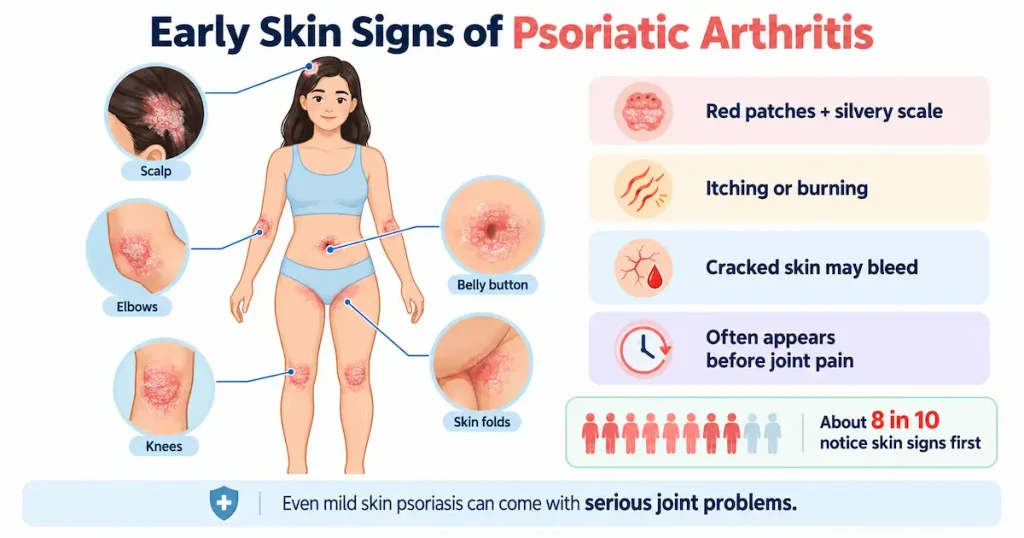
Skin signs show up as red patches with a silvery scale that itch, crack, or burn. For about 8 in 10 people, these psoriasis symptoms come before joint pain. Common skin changes include:
● Red patches of skin with a silvery scale
● An itchy or burning skin rash
● Cracked skin that may bleed
● Patches of skin on the scalp, elbows, knees, belly button, and skin folds
Mild skin psoriasis can still come with bad joints. So a small rash doesn’t mean a small problem. If a doctor found psoriasis years ago, keep an eye on your joints too.
The CDC explains how psoriasis affects your body.
Nail Signs of Psoriatic Arthritis
Nail signs include tiny dents, nails lifting off, thick buildup, and colour changes, seen in up to 80% of people with PsA.
Psoriatic arthritis nail changes are very common in people with PsA. Many people first notice them during a pedicure or at the pool. Nail problems are among the most overlooked psoriatic arthritis symptoms.
Nail Pitting (Tiny Dents)
Nail pitting looks like someone poked your nail with a pin. Dents can sit in rows or appear here and there. Healthline reports that pits show up in about 68% of people with PsA.
Nails Lifting Off the Nail Bed (Onycholysis)
The nail pulls away from the nail bed, and the loose part turns white or yellow. Many people mistake it for a fungus.
Thick Buildup Under the Nail
Chalky skin piles up under the nail tip. The nail gets thick and hard to trim.
Why Nail Changes Can Warn of Joint Trouble
Nail changes often appear with swelling in the end joints of your fingers and toes. They can show up before joint pain starts. So treat them as an early clue.
The American Academy of Dermatology shows photos of common PsA skin and nail signs.
Other Symptoms People Miss
PsA can also cause tiredness and red, painful eyes from an eye inflammation called uveitis.
Psoriatic arthritis affects more than skin and joints. Fatigue is a common symptom, even after a full night’s sleep. Eye problems are often associated with psoriatic arthritis. This table sums up the main signs and symptoms of psoriatic arthritis:
| Symptom | What It Looks or Feels Like | Body Area |
| Joint swelling | Warm, puffy, and sore | Hands, feet, knees |
| Dactylitis | The whole digit swells | Fingers and toes |
| Enthesitis | Sharp pain where tendons meet bone | Heels, soles, elbows |
| Scaly patches | Red skin with silvery scale | Scalp, elbows, knees |
| Nail pitting | Tiny dents in the nail | Fingernails and toenails |
| Fatigue | Tired even after rest | Whole body |
| Uveitis | Red, painful, or blurry eyes | Eyes |
Psoriatic Arthritis vs Rheumatoid Arthritis: What’s the Difference?
Both cause joint pain, but psoriatic arthritis usually brings skin and nail signs, and rheumatoid arthritis does not.
The two look alike at first. A rheumatologist tells them apart with an exam, imaging, and a blood test. Most people with psoriatic arthritis test RF-negative, which means their blood lacks a marker common in RA.
| Sign | Psoriatic Arthritis | Rheumatoid Arthritis |
| Skin and nails | Scaly patches, pitted nails | Usually none |
| Joint pattern | Often uneven | Usually both sides |
| Sausage fingers | Common | Rare |
| Heel and tendon pain | Common | Less common |
| RF blood test | Usually negative | Often positive |
How Different Climates Affect Psoriatic Arthritis Symptoms
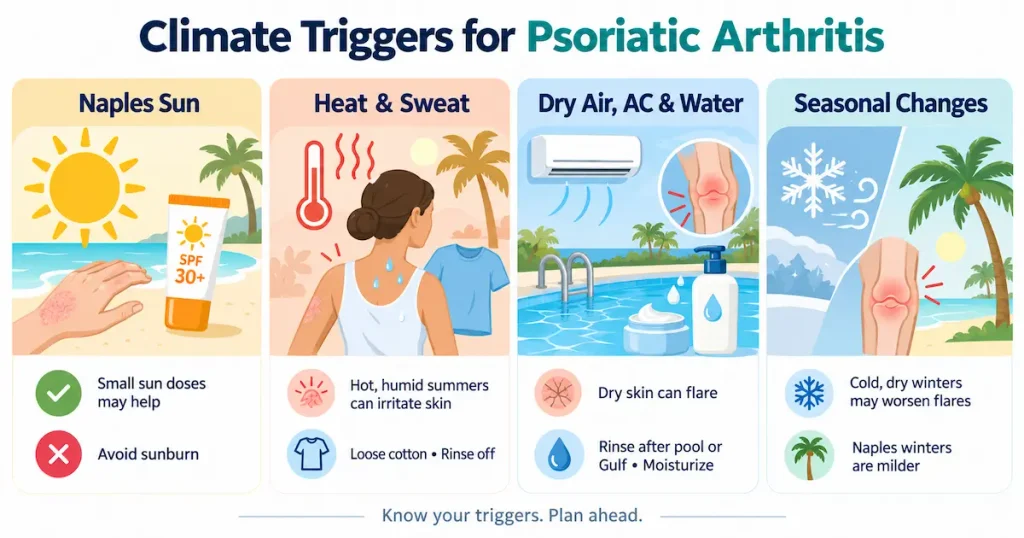
Weather doesn’t cause PsA, but sun, heat, and dry air can trigger skin and joint flares. Many people notice their skin and joint signs shift with the seasons. Knowing your triggers helps you plan ahead.
Naples Sun: Helpful for Some Skin, but Sunburn Can Trigger New Patches
Small doses of sun help some patches calm down. A sunburn can do the opposite, since new patches sometimes grow on injured skin. Wear sunscreen and stay in the shade from 10 a.m. to 4 p.m.
Summer Heat, Sweat, and Itchy Skin Folds
Naples summers stay hot and humid from June to September. Sweat sits in skin folds and makes patches sting. Wear loose cotton and rinse off after yard work or a round of golf.
Dry Winter AC, Pool Chlorine, and Saltwater
Winter air gets drier, and AC dries skin even more. Condo pool chlorine can sting cracked patches. Rinse after every swim, Gulf swims included, and use a thick, plain moisturizer.
Snowbirds: Cold Northern Winters vs Mild Naples Winters
Some people notice more flares in cold, dry northern winters, while Naples winters stay mild by comparison. RheumCare welcomes temporary and seasonal patients, helping you maintain continuity of care while you’re in town. Learn more about RheumCare’s tailored care and community support .
Long-Term Benefits of Catching PsA Signs Early
Early care lowers your risk of joint damage and helps you stay active longer. Without care, psoriatic arthritis can lead to lasting joint damage. Early treatment with a clear treatment plan gives your joints a better chance. Many people with psoriatic arthritis notice:
● Less pain and inflammation
● Better control of severe skin flares
● More energy through the day
● Easier tasks like opening jars or typing
● More time on the course, the court, or the beach
Effective treatment works best before joint damage begins. Start with trusted psoriatic arthritis care in Southwest Florida.
Do You See a Dermatologist or a Rheumatologist?
A dermatologist treats your skin, and a rheumatologist treats your joints, so many people need both.
Your skin doctor handles rashes and nails. A rheumatologist checks your joints, tendons, and spine. PsA is a form of arthritis that affects both areas, so the two doctors often work together. If you have psoriasis plus joint pain, ask for a referral. For more help with sore joints, see how to find help for your arthritis pain.
How RheumCare Diagnoses and Treats Psoriatic Arthritis in Naples
Naples patients get PsA care at RheumCare through ultrasound exams, two board-certified rheumatologists, and in-house treatment.
You can visit either office in Naples: Hillway Circle in East Naples or Vanderbilt Beach Rd in North Naples.
Ultrasound That Shows Joint and Tendon Swelling
Dr. Alain Alvarez holds national and international certification in musculoskeletal ultrasound. Ultrasound can show swelling in joints and tendons that X-rays miss. That helps your doctor spot PsA sooner.
Two Board-Certified Rheumatologists
Dr. Jeffrey Alper brings over 25 years of experience. Dr. Alvarez trained in internal medicine at the Mayo Clinic in Jacksonville. He also sees patients in Spanish.
Infusions and Injections in One Place
The private infusion suite and in-office injection programme keep biologic doses on schedule. Your provider explains the risks and benefits before you start.
Learn more about your psoriatic arthritis treatment options.
Early Warning Checklist: When to Call a Rheumatologist
Call a rheumatologist if you have psoriasis plus joint pain or nail changes plus morning stiffness. These warning signs of psoriatic arthritis deserve a call:
● A history of psoriasis and new joint pain
● A swollen finger or toe
● Heel pain that lasts for weeks
● Pitted or lifting nails plus morning stiffness
● Back pain that eases when you move
● Red, painful eyes
If two or more fit, you might have psoriatic arthritis. Book a visit soon.
How to Prepare for Your Visit
Bring photos, a symptom diary, and your medicine list. Flares come and go, so your doctor may not see them on visit day. Photos fill that gap. Bring:
● Photos of swollen joints, skin patches, and nails
● A short symptom diary
● Your family history, since psoriasis may run in families
● Your full medicine list
● Your questions, written down
FAQs
What Are the First Signs of Psoriatic Arthritis?
Joint pain, swelling, and stiffness often come first, especially in the hands, feet, and knees. Nail pitting, a swollen finger or toe (dactylitis), and heel pain are also common early symptoms. Morning stiffness lasting 30 minutes or more is another early clue worth tracking.
Can You Have Psoriatic Arthritis Without Psoriasis?
Yes. About 10% to 15% of people get joint pain before any skin rash ever shows up. Many of them still have a family history of psoriasis, which is why a rheumatologist will ask about relatives with the skin condition during your evaluation.
Do Nail Changes Mean I Have Psoriatic Arthritis?
Not always. Fungus and injuries can change nails too, so nail changes alone don’t confirm psoriatic arthritis. Pitted nails, nails lifting off the nail bed, or thick buildup under the nail, combined with joint pain or stiffness, call for a rheumatologist visit to check further.
Does Psoriatic Arthritis Show Up in Blood Tests?
No single blood test confirms PsA. Most people with psoriatic arthritis test RF-negative, which helps rule out rheumatoid arthritis. Doctors combine blood work with a physical exam, a check of your joints, skin, and nails, and imaging to reach a full diagnosis.
Is Psoriatic Arthritis Worse in Hot or Cold Weather?
Many people feel worse in cold, dry weather, since dry air and indoor heat can pull moisture from the skin. Naples heat can make skin folds itch and sweat, and sunburn can trigger new skin patches, so sunscreen and loose cotton clothing help year round.
Does RheumCare Treat Psoriatic Arthritis?
Yes. RheumCare’s board-certified rheumatologists diagnose and treat psoriatic arthritis in Naples, FL, using musculoskeletal ultrasound, blood work, and a full joint exam. Treatment options include in-office injections and infusions, so your care plan can start without a referral to an outside facility.
Get Your PsA Signs Checked in Naples
Psoriatic arthritis symptoms often start small: a sore heel, a dented nail, or a scaly elbow. Catching them early lowers your risk of joint damage, and good treatments are available.
RheumCare’s board-certified rheumatologists in Naples, FL combine ultrasound, bloodwork, and a hands-on joint exam to build a treatment plan around your joints, your skin, and your life. Read what to expect at your first appointment before you come in.
Book with RheumCare at 6605 Hillway Circle or 2340 Vanderbilt Beach Rd. Call (239) 262-6550 today to schedule your evaluation.