
Joint pain that won’t go away can leave you wondering when to see a rheumatologist. Most people wait and hope it gets better. But some signs mean your joints need more than rest and ibuprofen. This guide covers the symptoms that call for a specialist. It also covers how serious your pain might be, and what happens at your first visit with our team in Naples, FL.
TL;DR
- Joint pain lasting more than six weeks, or morning stiffness that lasts past 30 minutes, means it’s time to see a rheumatologist.
- Swelling in more than one joint, tiredness, fever, or a rash can mean your immune system is causing the pain.
- Your primary doctor usually sends you to a rheumatologist. You can also call RheumCare in Naples, FL directly.
- Waiting too long can cause lasting joint damage. See a doctor early.
- Call (239) 262-6550 to book your visit.
What Does a Rheumatologist Treat?
A rheumatologist treats diseases that attack your joints and muscles. Your body’s own defenses cause the damage. These diseases include rheumatoid arthritis, lupus, gout, psoriatic arthritis, and ankylosing spondylitis. An orthopedist fixes joint damage from injury or wear. A rheumatologist looks for swelling and pain your immune system causes instead.
Your immune system sometimes attacks healthy tissue by mistake. This causes pain and swelling that spreads across several joints, not just one. RheumCare treats these conditions every day at our Naples, FL office. We use bloodwork, imaging, and your symptom history to find the cause.
When to See a Rheumatologist: Your Symptom Checklist
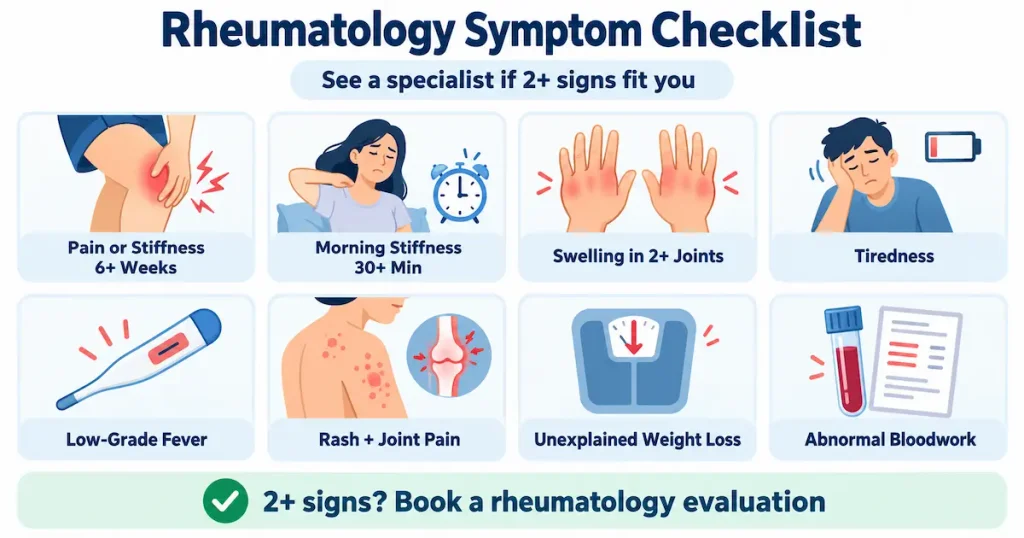
You need a rheumatologist if two or more of these symptoms describe you. Check each one honestly before your next visit.
- Joint pain or stiffness lasting more than six weeks. Pain that lasts this long rarely comes from a simple strain.
- Morning stiffness lasted more than 30 minutes. Pain from overuse usually loosens up in minutes. Inflammatory pain does not.
- Swelling in more than one joint, especially on both sides of your body. Swelling in both hands or both knees often points to inflammatory arthritis.
- Tiredness that doesn’t improve with rest.
- A low-grade fever with no clear cause.
- A new skin rash with joint pain.
- Weight loss you can’t explain.
- Abnormal bloodwork your doctor flagged, such as high inflammatory markers.
If you checked two or more boxes, call our Naples, FL practice. Get your joints checked by a specialist soon.
When Is Joint Pain Serious Enough to See a Rheumatologist?
Joint pain turns urgent when it’s hot, swollen, and comes with fever. It’s also urgent if you suddenly can’t put weight on the joint. Sort your symptoms into one of these three levels.
Get care today if your joint is hot, red, swollen, and feverish. These signs can mean infection. RheumCare in Naples accepts urgent evaluations when symptoms get worse fast.
See a doctor this week if pain or swelling lasts several days and doesn’t improve. Also see a doctor if a new joint starts hurting on both sides of your body at once.
Watch and track it if your pain is mild and comes and goes, with no swelling or fever. Write down when it starts and how long it lasts. Book an appointment once it crosses the six-week mark or the 30-minute stiffness mark above.
Rheumatologist vs Primary Care: What’s the Difference?
Your primary care doctor handles your first visit. They order basic labs, rule out common causes, and decide if you need a specialist. A rheumatologist takes over from there.
Rheumatologists train for years to treat autoimmune and inflammatory disease. They read complex lab results, manage long-term treatment plans, and track your disease over years, not weeks. Most patients need a referral before their first visit. Our Naples, FL team can also help you figure out if your symptoms fit this path.
Some patients see an orthopedist instead, for injuries like a torn meniscus. If your pain comes from inflammation and not injury, a rheumatologist is the right choice. Read finding the right rheumatologist in Florida to help pick a specialist near you.
What Happens If You Wait Too Long?

Waiting too long lets rheumatoid arthritis and other autoimmune diseases damage your cartilage and bone. This damage often can’t be undone. Early treatment changes the outcome. Patients who start treatment within a few months keep more joint function than those who wait years.
The CDC reports that about 53.2 million adults in the United States have diagnosed arthritis. Untreated inflammatory arthritis remains a leading cause of long-term disability. Patients who wait often arrive at our office with more joint damage than those who come in early.
What to Expect at Your First Appointment
Your first visit starts with a full history. Your doctor asks about your symptoms, family history, and medications at our Naples, FL office. Bring a list of your symptoms and dates. Bring any past lab results or imaging too.
Bloodwork and imaging usually follow the exam. These tests check for inflammation markers and joint changes that guide your diagnosis. Some conditions take more than one visit to confirm. Don’t expect instant answers on day one. Read what to expect at your first appointment for a full walkthrough before you come in.
FAQ
Do I Need a Referral to See a Rheumatologist?
Most insurance plans require a referral from your primary care doctor. Contact RheumCare’s front desk in Naples, FL to confirm what your plan requires.
How Long Should Joint Pain Last Before I See a Doctor?
See a doctor once joint pain or stiffness passes six weeks. See a doctor sooner if you notice swelling, fever, or a rash.
Can a Rheumatologist Help With Joint Pain That Isn’t Arthritis?
Yes. Rheumatologists treat gout, lupus, and other conditions that cause joint pain outside of arthritis.
What’s the Difference Between a Rheumatologist and an Orthopedist?
A rheumatologist treats inflammation and autoimmune disease. An orthopedist treats injuries like fractures and torn ligaments.
What Blood Tests Does a Rheumatologist Run to Diagnose Joint Pain?
A rheumatologist usually orders tests for inflammatory markers, rheumatoid factor, and anti-CCP antibodies. These results help confirm or rule out autoimmune arthritis.
Can Joint Pain From an Old Injury Turn Into Something a Rheumatologist Treats?
Yes. An old injury can trigger osteoarthritis or a flare of inflammatory arthritis years later. A rheumatologist can tell whether new swelling comes from the original injury or a separate autoimmune cause.
Is Joint Pain That Moves From One Joint to Another a Sign I Need a Rheumatologist?
Yes. Pain that shifts between joints, known as migratory joint pain, often points to conditions like gout, lupus, or reactive arthritis. This pattern is a clear reason to schedule an evaluation.
Get Checked at RheumCare in Naples, FL
Knowing when to see a rheumatologist starts with listening to your joints. Six weeks of pain, 30 minutes of morning stiffness, or swelling in more than one joint are signals worth paying attention to. Many patients notice these signs first when joint symptoms interrupt daily life, long before they book an appointment.
Don’t wait for your symptoms to get worse. Call RheumCare at (239) 262-6550 to book your appointment today.