
Osteoarthritis symptoms start small and build slowly. A knee that aches after a walk. A knuckle that looks slightly swollen. A hip that feels stiff when you climb out of bed. People often brush off these signs as normal aging, but they carry real information about what’s happening inside the joint.
This guide breaks down osteoarthritis symptoms joint by joint, so you can recognize what your body is telling you and know when to reach out to our Naples, FL rheumatology team.
RheumCare™ built this guide so Naples, FL patients can match what they’re feeling to the right next step, whether that’s watching and waiting or booking an exam.
TL;DR
- Osteoarthritis symptoms include joint pain, stiffness under 30 minutes, swelling, and a grinding sensation called crepitus.
- Symptoms differ by joint. Knee pain worsens on stairs, hip pain radiates to the groin, and hand osteoarthritis causes bony knuckle nodules.
- Morning stiffness under 30 minutes points to osteoarthritis. Stiffness lasting longer points to rheumatoid arthritis.
- RheumCare’s Naples, FL team diagnoses and treats osteoarthritis through exams, imaging, and options like joint injections.
Common Signs of Osteoarthritis
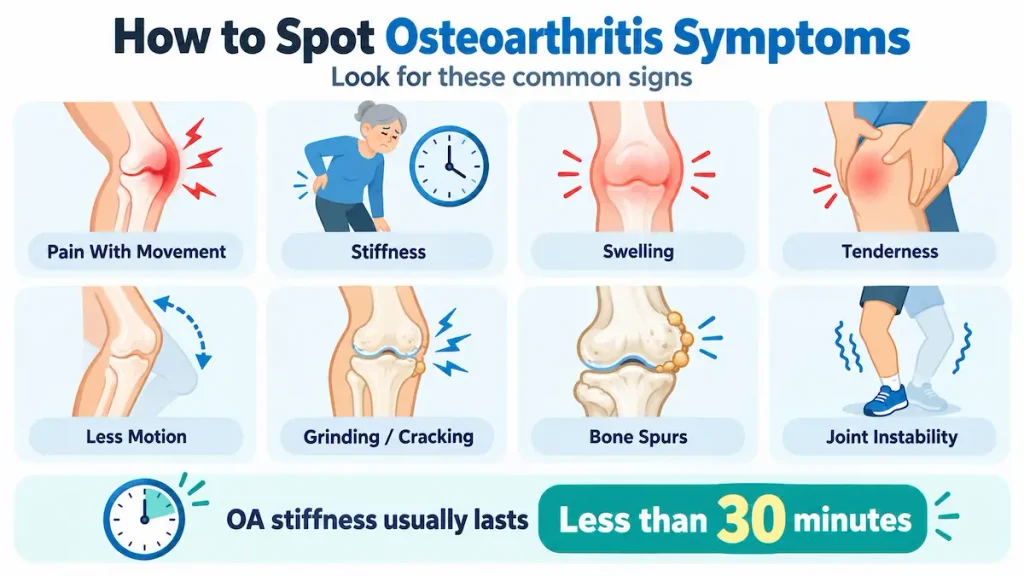
Osteoarthritis produces a recognizable set of symptoms, even though the exact joint involved changes the details. Watch for these signs of osteoarthritis:
- Pain during or right after movement that eases with rest
- Stiffness that feels worst after waking up or sitting still
- Swelling around the joint from soft tissue inflammation
- Tenderness when you press on or near the joint
- Reduced range of motion in the affected joint
- Crepitus, a grinding or crackling feeling in the joint when it moves
- Bone spurs, small hard bumps that form near the joint
- Instability, a loose feeling that makes the joint feel unsteady
One detail matters more than the rest. Osteoarthritis stiffness typically lasts less than 30 minutes. That marker helps separate osteoarthritis from other joint conditions, and it’s the first question our rheumatology team in Naples asks during an evaluation.
How Common Is Osteoarthritis?
Osteoarthritis touches more lives than most people expect, and the numbers keep climbing. The Centers for Disease Control and Prevention reports that about 33 million U.S. adults have osteoarthritis.
Early Osteoarthritis Symptoms vs. Advanced Symptoms
Early osteoarthritis feels different from advanced disease, and the gap between them can span years.
Early osteoarthritis causes mild pain tied to activity, and the pain fades with rest. Stiffness clears within minutes. X-rays often look normal at this stage, since cartilage loss hasn’t yet changed the bone underneath.
Advanced osteoarthritis causes constant pain, including pain at night. Stiffness lasts longer and limits daily movement. Bone spurs and joint changes show up clearly on imaging.
| Stage | Pain Pattern | Stiffness | Imaging |
| Early osteoarthritis | Mild, tied to activity | Clears in minutes | Often normal |
| Advanced osteoarthritis | Constant, worse at night | Lasts longer, limits movement | Bone spurs, narrowed joint space |
Patients who come to RheumCare’s Naples clinic during the early stage usually have more treatment paths open, including joint injections that ease pain and delay the need for surgery.
Osteoarthritis Symptoms by Joint
Osteoarthritis can affect nearly any part of the body, but five sites account for most cases: the knees, hips, hands, spine, and feet. Each site produces its own pattern of symptoms.
Osteoarthritis Knee Symptoms
Osteoarthritis knee symptoms usually start with pain on stairs, when squatting, or after standing for a long stretch. A grinding sensation often shows up when you bend or straighten the knee. Swelling follows activity, and stiffness after sitting makes the first few steps difficult. Some patients notice a feeling that the knee will buckle or give way.
Hip Osteoarthritis Symptoms
Hip osteoarthritis begins as a dull ache in the groin, buttock, or thigh, especially first thing in the morning. Pain flares during walking or climbing stairs, then settles down with rest. Everyday tasks such as putting on socks or getting into a car grow harder as the hip loses range of motion.
Hand Osteoarthritis Symptoms
Hand osteoarthritis shows up as stiffness in the fingers and a weaker grip. Bony nodules can form at the finger joints over time, a visible sign of cartilage loss. The base of the thumb is a common target, which turns simple tasks like turning a key into a painful chore.
Spine Osteoarthritis Symptoms
Spinal osteoarthritis causes stiffness and aching in the neck or lower back. In more advanced cases, changes in the back press on nearby nerves. That can cause numbness, tingling, or weakness that spreads into the arms or legs. Patients sometimes mistake this referred pain for a more serious neurological problem, a condition involving the nerves, which makes a proper evaluation worth scheduling rather than skipping.
Foot Osteoarthritis Symptoms
Foot osteoarthritis most often targets the big toe joint, causing pain with walking and standing. Stiffness in the foot changes your gait and shifts stress onto the knees and hips, one reason foot symptoms deserve attention early.
Patients across Naples, FL bring all five patterns through our doors, and joint-specific symptoms are exactly what our exams are built to sort out.
Osteoarthritis vs. Rheumatoid Arthritis: Key Differences
Osteoarthritis and rheumatoid arthritis share some symptoms, but clear differences separate them once you know what to check. Rheumatoid arthritis also causes systemic symptoms, meaning signs that affect the whole body rather than just one joint, such as fatigue and fever.
| Factor | Osteoarthritis | Rheumatoid Arthritis |
| Onset | Gradual, over months or years | Often sudden |
| Morning stiffness | Under 30 minutes | Over 30 minutes |
| Joints affected | Often one or two | Usually symmetrical, both sides |
| Systemic symptoms | None | Fatigue, fever |
Our guide, RA vs OA: telling them apart, breaks down these differences in more depth (link once published). RheumCare’s Naples team can confirm a diagnosis with a physical exam and imaging.
Degenerative Joint Disease Symptoms: Same Condition, Different Name
Degenerative joint disease symptoms match osteoarthritis symptoms exactly. At our Naples, FL clinic, doctors use both terms for the same condition, so a referral that says “degenerative joint disease” means osteoarthritis. Some older medical records and insurance forms still use the degenerative joint disease name instead of osteoarthritis, which can confuse patients searching for their diagnosis online. If your imaging report or referral lists that term, it points to the same cartilage breakdown covered throughout this guide, and the same treatment options apply.
What Causes Osteoarthritis?
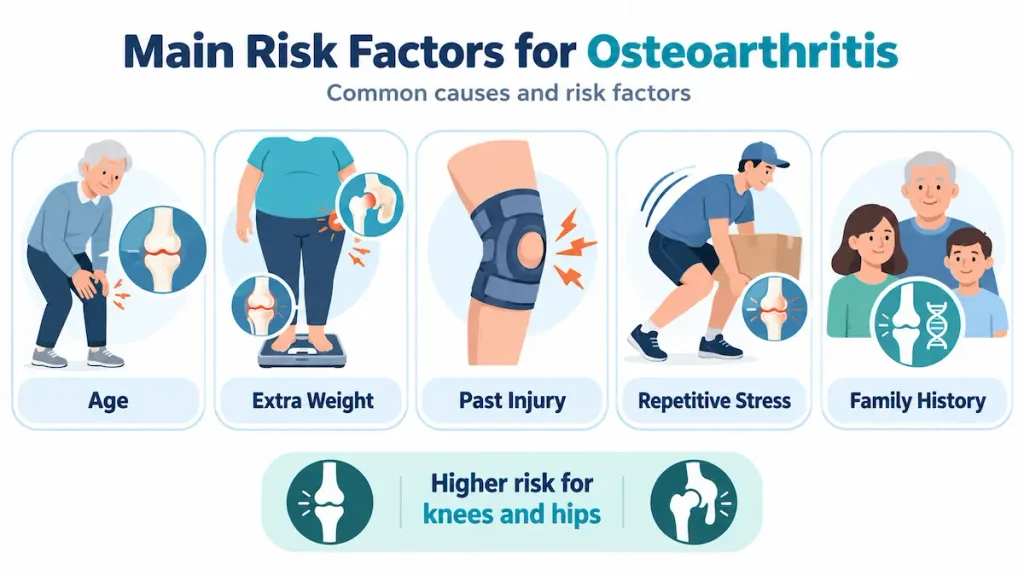
Several factors raise your risk for osteoarthritis. Age ranks as the biggest one, since cartilage thins naturally over the decades. Extra body weight adds stress to weight-bearing joints like the knees and hips. Past joint injuries, repetitive stress from work or sports, and family history all play a role too. Our Naples, FL rheumatologists review these risk factors during every new patient exam.
When Should You See a Doctor for Osteoarthritis Symptoms?
Call a doctor if joint pain doesn’t ease with rest, if swelling doesn’t go down, or if pain interferes with daily tasks like walking or getting dressed. Numbness or weakness in an arm or leg, especially alongside spine symptoms, needs prompt evaluation. Diagnosis typically involves a physical exam and X-rays that check for joint space narrowing and bone spurs.
Our Naples, FL clinic offers full osteoarthritis treatment in Southwest Florida, from diagnosis through long-term pain management.
Frequently Asked Questions
Patients ask our Naples, FL team these questions every week.
What Is the First Sign of Osteoarthritis?
Joint pain during or after activity is usually the first sign. The pain eases with rest and returns once you use the joint again.
Can Osteoarthritis Symptoms Come and Go?
Yes. Symptoms often flare during heavy joint use and calm down with rest, a pattern common in early and moderate osteoarthritis.
What Joint Is Most Commonly Affected by Osteoarthritis?
The knee is affected most often, followed closely by the hip and hands.
How Do I Know if It’s Osteoarthritis or Rheumatoid Arthritis?
Morning stiffness gives the clearest answer. Osteoarthritis stiffness clears in under 30 minutes. Rheumatoid arthritis stiffness lasts longer and usually affects joints on both sides of the body.
Is Osteoarthritis the Same as Arthritis?
Osteoarthritis is one type of arthritis, not the only type. Arthritis is a broad term for joint inflammation, and osteoarthritis specifically involves the breakdown of cartilage.
Can Osteoarthritis Be Reversed or Cured?
No. Osteoarthritis has no cure, and damaged cartilage doesn’t regrow on its own. Treatment focuses on managing pain and slowing further joint damage.
What Makes Osteoarthritis Symptoms Worse?
Cold weather, long periods of inactivity, and repetitive joint stress commonly worsen osteoarthritis symptoms. Extra body weight also adds pressure to weight-bearing joints and intensifies pain.
Schedule Your Visit at RheumCare™ in Naples, FL
Osteoarthritis symptoms rarely improve without a plan. If joint pain, stiffness, or swelling won’t quit, our Naples, FL rheumatology practice can find the cause and build a treatment plan around your joints and your life.
Call (239) 262-6550 to schedule an evaluation.