
A gout diet may help reduce the risk of flares, but food alone rarely controls gout. Patients across Naples, FL ask us what to eat and what to skip. The RheumCare™ team wrote this guide to answer both.
You’ll learn which foods raise uric acid, which ones are safe, and how to handle drinks and holiday meals. You’ll also see when it’s time to call a rheumatologist.
TL;DR
- Smart food choices lower flare risk, but they rarely replace medicine.
- Beer, sugary drinks, and organ meats carry the highest risk.
- Vegetables, dairy, and whole grains are safe picks.
- Doctors usually aim for a uric acid level of 6 mg/dL or lower.
- RheumCare™ pairs food changes with medicine for Naples patients.
What Is a Gout Diet and Does It Really Work?
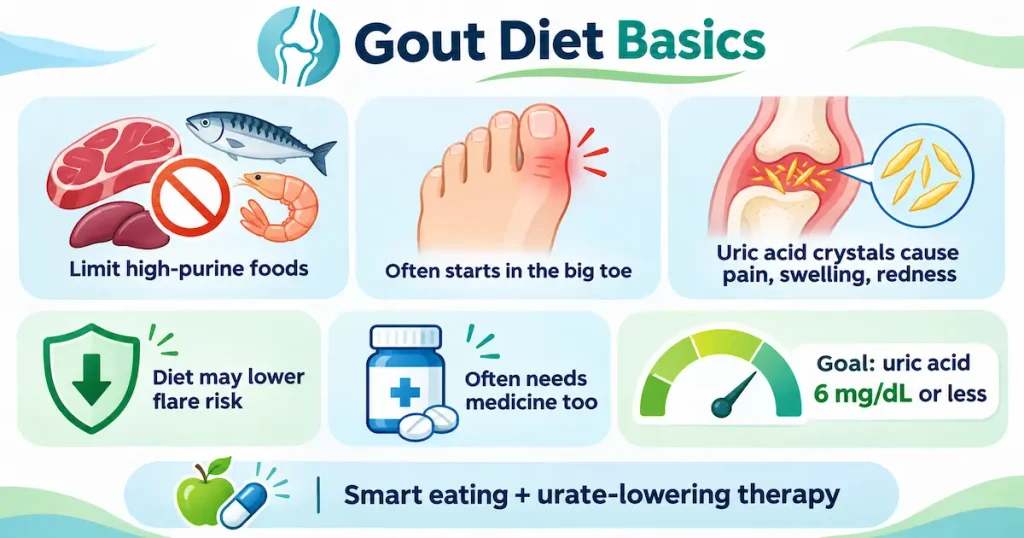
This eating plan limits foods that may raise uric acid and helps lower your risk of gout flares. It rarely works without medicine, though. In 2015-16, gout affected about 9.2 million US adults, or 3.9%, according to an NHANES analysis in Arthritis & Rheumatology.
Gout is a form of inflammatory arthritis that most often begins in the big toe, and flares often strike suddenly at night.
Your body makes uric acid when it breaks down purines. Extra uric acid forms sharp crystals in your joints. Those crystals cause the pain, swelling, and redness of a flare. Dietary changes generally have a modest effect on uric acid levels, according to Gout Education. Doctors usually aim for 6 mg/dL or lower. This helps explain why many patients also need urate-lowering medication, such as allopurinol.
Our rheumatology team at RheumCare™ pairs smart eating with urate-lowering therapy. Read our guide to gout and joint pain for each treatment step.
What Does the Evidence Actually Support About Gout Diets?
Diet helps, but the evidence shows it lowers uric acid only modestly, and medicine does the heavy lifting. According to a 2020 ACR gout guideline summary, restricting alcohol, purines, and high-fructose corn syrup has limited evidence for lowering urate, while weight loss reduces gout flare-ups.
The same guideline finds vitamin C supplements ineffective. It sets a goal of a serum urate level of 6 mg/dL or lower and names allopurinol as the first-line urate-lowering drug.
That does not make food unimportant. Food choices still help you avoid the biggest triggers, support a healthy weight, and keep you on track with treatment. They work best as one part of a plan that also includes medicine, regular blood tests, and follow-up visits with your rheumatologist.
Which Foods Should You Avoid With Gout?
Prioritize limiting beer, sugary drinks, and organ meats, which are associated with an increased risk of gout flares. Limit red meat, shellfish, and oily fish. Vegetables, beans, and lentils don’t raise gout risk, so keep them.
| Tier | Food or drink | Why it matters |
| Avoid | Beer | Raises risk more than any other drink |
| Avoid | Soda with high-fructose corn syrup | Fructose pushes uric acid up |
| Avoid | Liver, kidney, sweetbreads | Very high in purines |
| Limit | Spirits | Raise risk, but less than beer |
| Limit | Beef, pork, lamb | Moderate to high purines |
| Limit | Shrimp, scallops, sardines, anchovies | Shellfish and oily fish carry high purines |
| Limit | Fruit juice | Concentrated fructose |
| Safe | Spinach, asparagus, mushrooms | High-purine vegetables add no extra risk |
Many Naples restaurants serve stone crab, shrimp, and scallops. Consider grilled chicken or an appropriate portion of a lower-purine fish instead. Our RheumCare™ rheumatologists help local patients sort real triggers from myths.
Which Foods Are Safe on a Gout Diet?
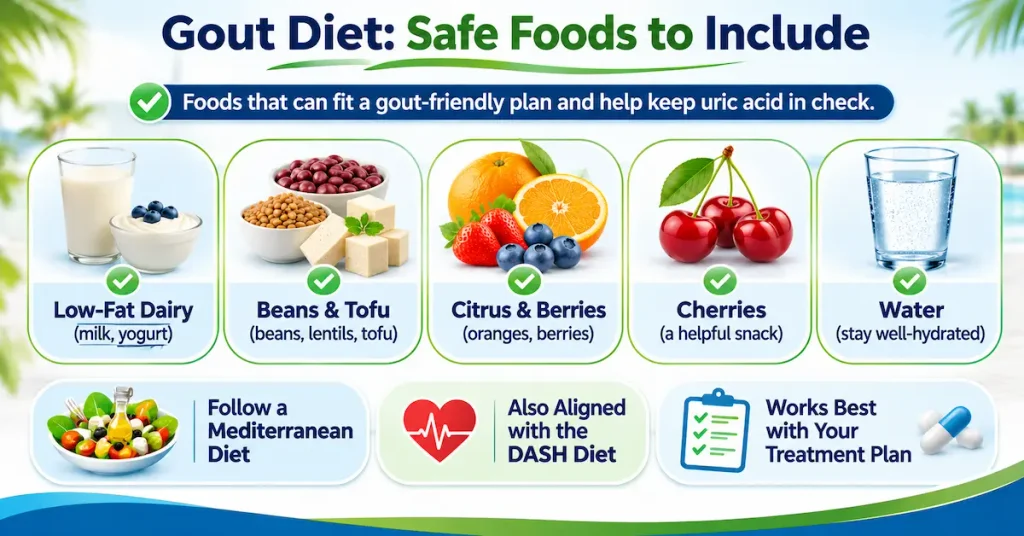
Low-fat dairy, vegetables, whole grains, beans, and fruit can generally be included in a gout-friendly diet. Mayo Clinic ties healthy gout eating to the Mediterranean diet and the DASH diet.
- Low-fat milk and yogurt: studies link them to lower uric acid.
- Beans, lentils, and tofu: these give you protein without the purine load of red meat.
- Citrus and berries: fresh Southwest Florida produce fits this plan well.
- Cherries: studies show a modest benefit. Treat them as a snack, not a treatment.
- Water: sip it all day to help your kidneys clear uric acid.
Arthritis Research Canada links low-fat dairy to lower uric acid and gout risk, and coffee shows the same pattern.
Our Naples clinic builds these foods into gout care for each RheumCare™ patient.
How Do Alcohol and Holiday Foods Affect Gout?
Beer raises gout risk the most. A large study published in The Lancet found that consuming two or more beers daily was associated with approximately twice the risk. Two servings of spirits were associated with an approximately 1.6-fold increase. Some earlier research found no significant increase in gout risk associated with moderate wine consumption, while newer evidence suggests that alcohol may still affect uric acid levels. Wine isn’t a free pass.
Skip alcohol during a flare. If you take allopurinol, ask your doctor how alcohol may affect your uric acid levels and gout management. Between flares, limit alcohol and keep beer at the bottom of your list.
Holiday tables hold plenty of traps. Choose a moderate portion of turkey and consider avoiding chicken liver pâté, giblet stuffing, shrimp cocktail, and sugary cider. Harvard Health notes that holiday flares track with extra eating and drinking, though the research is thin. Keep your flare medicine nearby, since offices close on holidays. RheumCare™ patients in Naples can call (239) 262-6550 when a flare starts.
How Do Water and Weight Loss Help Control Uric Acid?
Adequate hydration and gradual weight loss can support gout management. Staying hydrated supports kidney function, while maintaining a healthy weight may help reduce flare risk. Southwest Florida’s heat makes it easy to forget to drink, so keep a bottle within reach.
Avoid crash diets and fasting plans. Rapid weight loss raises uric acid and can set off a flare. Aim for slow, steady progress with the same vegetables, dairy, and whole grains that fill your gout diet plan.
What Does a Gout Diet Plan Look Like in Naples?
A solid plan centers on vegetables, dairy, and water, with small meat portions. Here’s one sample day:
- Breakfast: Greek yogurt with berries and whole grain cereal.
- Lunch: lentil soup, a side salad, and whole grain bread.
- Dinner: baked chicken, brown rice, and roasted vegetables.
- Drinks: water and unsweetened tea.
Include beans or lentils several times a week, and keep red meat portions moderate. Aim for steady weight loss, since crash diets raise uric acid.
Eating out works too. Order grilled fish on Fifth Avenue South. Pick sparkling water at a Vanderbilt Beach happy hour. Buy fresh produce near Pine Ridge or Park Shore, and share dessert in Old Naples.
When Should You See a Rheumatologist in Naples?
Consider seeing a rheumatologist if you experience two or more gout flares in a year. Go sooner if you notice hard lumps called tophi, joint pain between flares, or high uric acid despite diet changes. RheumCare™ offers gout care in Naples with exams and treatment plans. Browse the other conditions we treat too. Call (239) 262-6550 to book.
Not sure what a first visit involves? Read what to expect at your first appointment before you book, then bring your food log and any past uric acid results.
Gout Diet FAQs
These answers address seven common questions about gout diets among patients in Naples.
What Foods Trigger Gout the Most?
Beer, sugary drinks, and organ meats trigger gout the most. Red meat and shellfish come next. These foods raise uric acid through purines or fructose, which can set off a painful flare. Limiting them helps, but most patients still need medicine to keep uric acid at a safe level.
Are Eggs Safe With Gout?
Yes. Eggs are low in purines and fit most gout meal plans. Pair them with vegetables and whole grains instead of bacon or sausage, since processed meat is better limited. If you also have high cholesterol, ask your doctor how many eggs fit your week.
Are Bananas OK for Gout?
Yes. Bananas are low in purines and safe to eat. They also provide potassium and fiber, making them a convenient addition to a gout-friendly meal plan. Enjoy one with Greek yogurt at breakfast, and choose whole fruit instead of fruit juice, since juice delivers concentrated fructose without the fiber.
Can I Drink Wine With Gout?
Wine carries less risk than beer or spirits, but it still raises uric acid. Skip it during a flare. Between flares, ask your rheumatologist before pouring a glass, especially in the first months of urate-lowering medicine. Sparkling water with citrus makes an easy swap at dinner.
What Should I Eat During a Gout Flare?
Food doesn’t treat a flare. Drink water, skip alcohol, take your prescribed medicine, and call your doctor. Keep meals simple, with vegetables, whole grains, and low-fat dairy, until the pain settles. Severe or lasting pain deserves a prompt visit. Then return to your regular gout diet plan.
Do Cherries Cure Gout?
No. Cherries show a modest benefit in studies, but they don’t replace medicine. Enjoy them as a snack alongside water, vegetables, and low-fat dairy. If flares keep returning, ask your rheumatologist about urate-lowering therapy such as allopurinol instead of relying on fruit.
Is a Low-Purine Diet Enough to Treat Gout?
Rarely. Many patients also need medication to manage gout effectively. A Naples rheumatologist at RheumCare™ can set your uric acid target, which is usually 6 mg/dL or lower, and pair food changes with treatment. Dietary changes may help reduce flare triggers, while medication can lower uric acid levels and help prevent new urate crystals from forming.
Final Thoughts on Your Gout Diet
Smart eating is a strong first step, not the whole treatment. A good gout diet limits beer, sugary drinks, and organ meats. It favors vegetables, dairy, and water. Add medicine when flares keep coming. Track your flares, share your food log with your doctor, and ask for a uric acid blood test so your target is clear. Our Naples team will review your labs, flare history, and eating habits, then match them with the right treatment.
Call (239) 262-6550 to book a visit today and build your gout management plan in Naples, FL.